The Agent Playbook
Honest, non-hype notes on working with AI coding agents. Not “I run eight agents at once” — the opposite: what it actually takes to keep one agent useful, on budget, and inside its lane.
Start from #1 →Cost & Control
5 articlesWhy more agents is not the goal, and what runs away if nobody is watching the meter.
 0111 min read
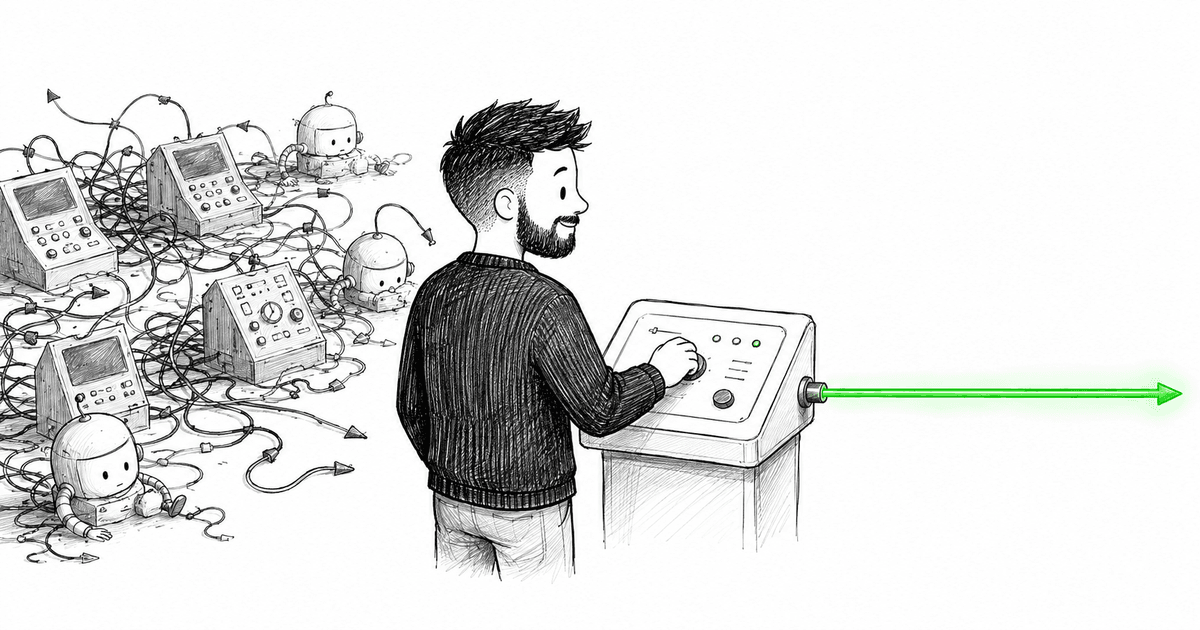
You Probably Don't Need Multi-Agents
Open almost any "how I use AI" post and you'll find an orchestra: a planner agent, a coder agent, a reviewer agent, a tester agent, all pinging each other. It looks impressive. It's also the most expensive, most fragile way to get worse results than one agent you actually taught to do the job.
 0212 min read
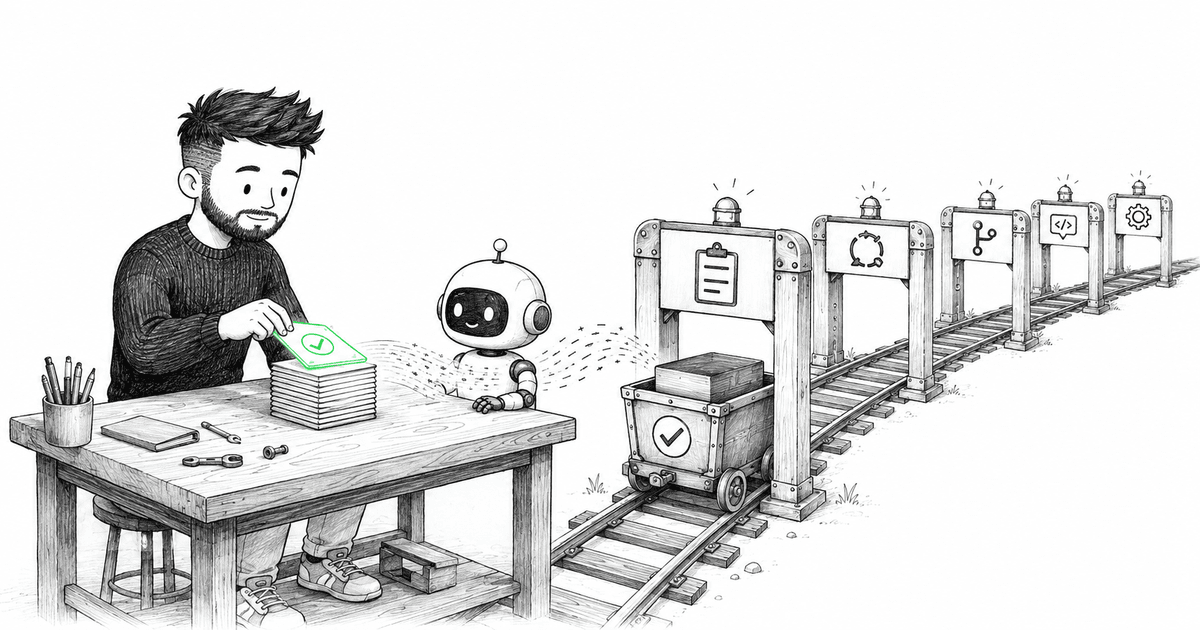
Do It As Usual: Teaching One Agent Your Whole Workflow
I can open a fresh session, type "take ticket 123 and do it as usual," and the agent runs the entire routine — assign, sprint, branch, commit, PR, pipeline. People assume that's a clever prompt. It isn't. It's months of small corrections turned into rules the agent never forgets.
 0310 min read
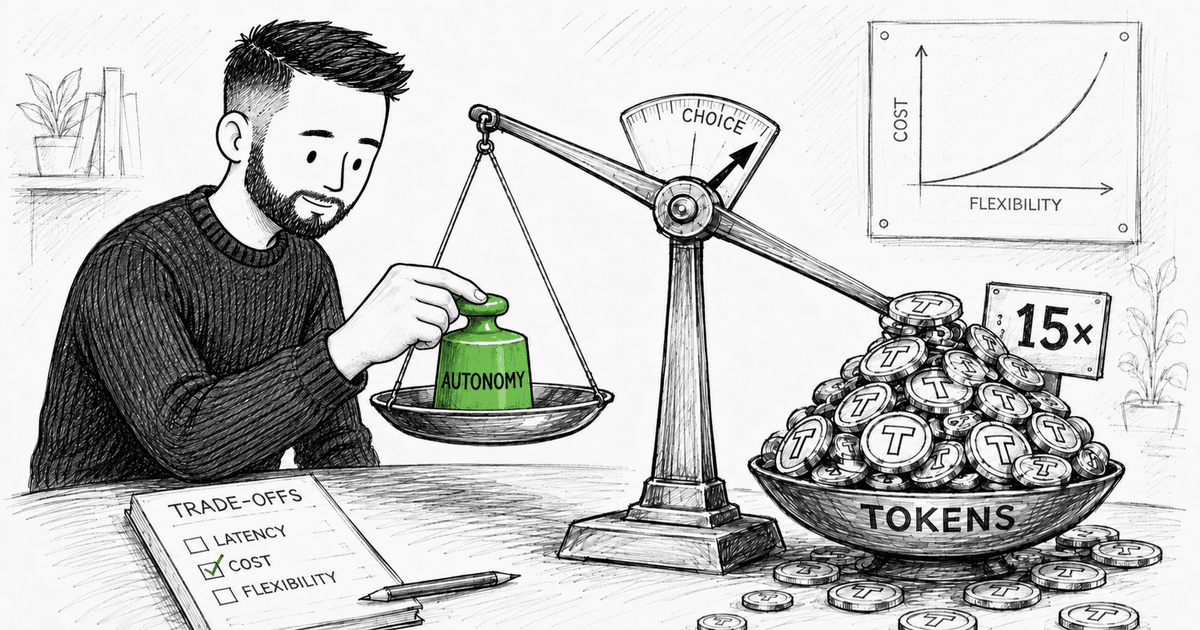
The Token Bill Is Part of the Architecture
A story made the rounds: someone put an agent on a schedule to keep checking their environment, it got stuck in a loop one night, and instead of a couple of hours it burned through a fortune in tokens by morning. The lesson isn't "watch your usage." It's that cost is a design constraint, and most agent setups treat it as a footnote.
 049 min read
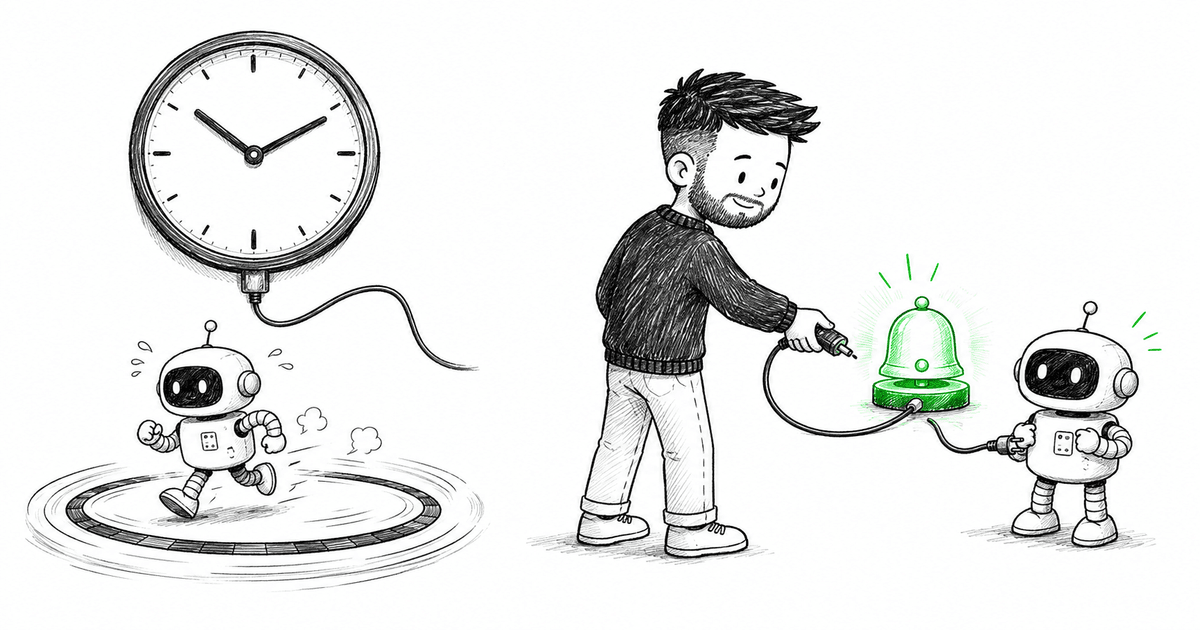
Test on Change, Not on a Timer
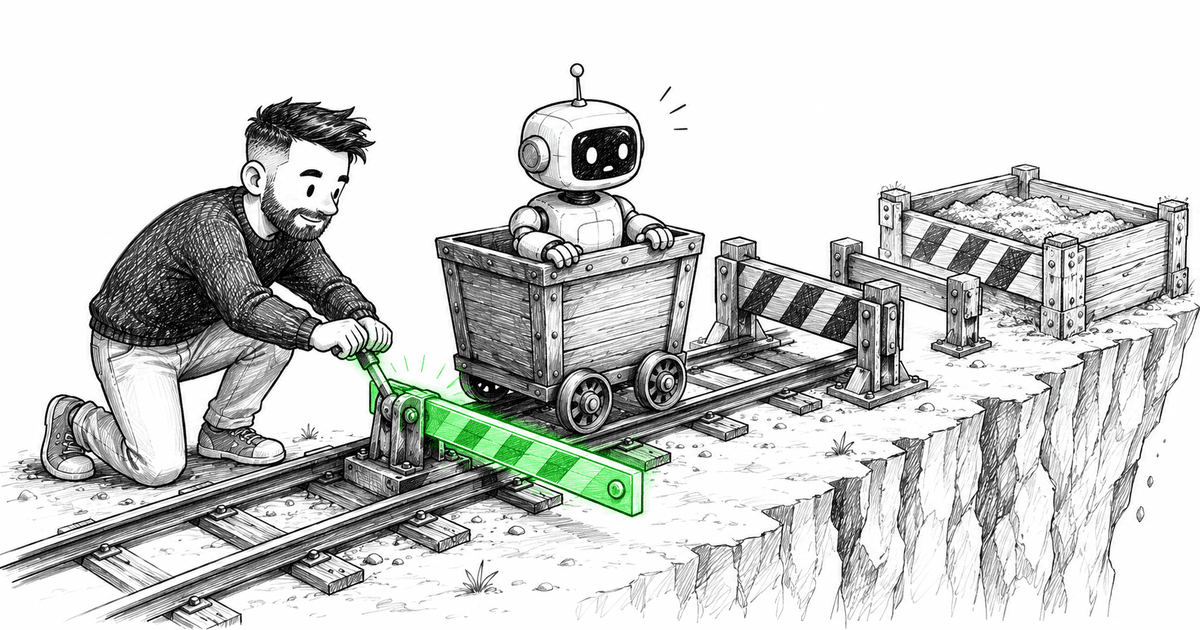
The instinct is to put the agent on a schedule: every few minutes, wake up and check the environment. That instinct is where a lot of runaway costs and pointless runs come from. An agent should be woken by a reason — a commit, a deploy, a failing check — not by a clock ticking over whether or not anything happened.
 0510 min read
Guardrails for a Runaway Agent
An agent is stateful, and its errors compound: one wrong step sends it down an entirely different path, and it can't tell that it's lost. Autonomy without guardrails isn't trust — it's hoping. The job isn't to make the agent never fail. It's to make sure that when it does, the blast radius is small.
Context & Judgment
5 articlesWhat an agent can see, what it can do, and when it should stop and ask instead of acting.
 069 min read
The Context Is the Product
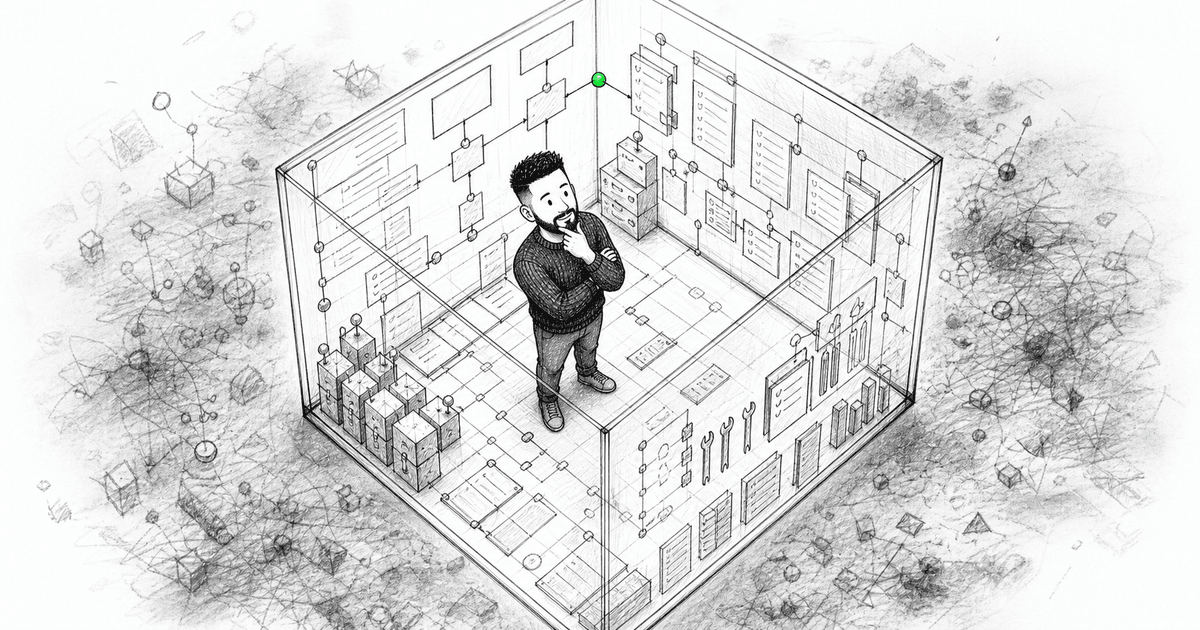
A capable model with the wrong context is still a bad agent. The useful part of an agent is not the model in isolation, but the project knowledge, rules, tools, and decisions that shape what it can see before it acts.
 079 min read
Tools Are Part of the Agent's Intelligence
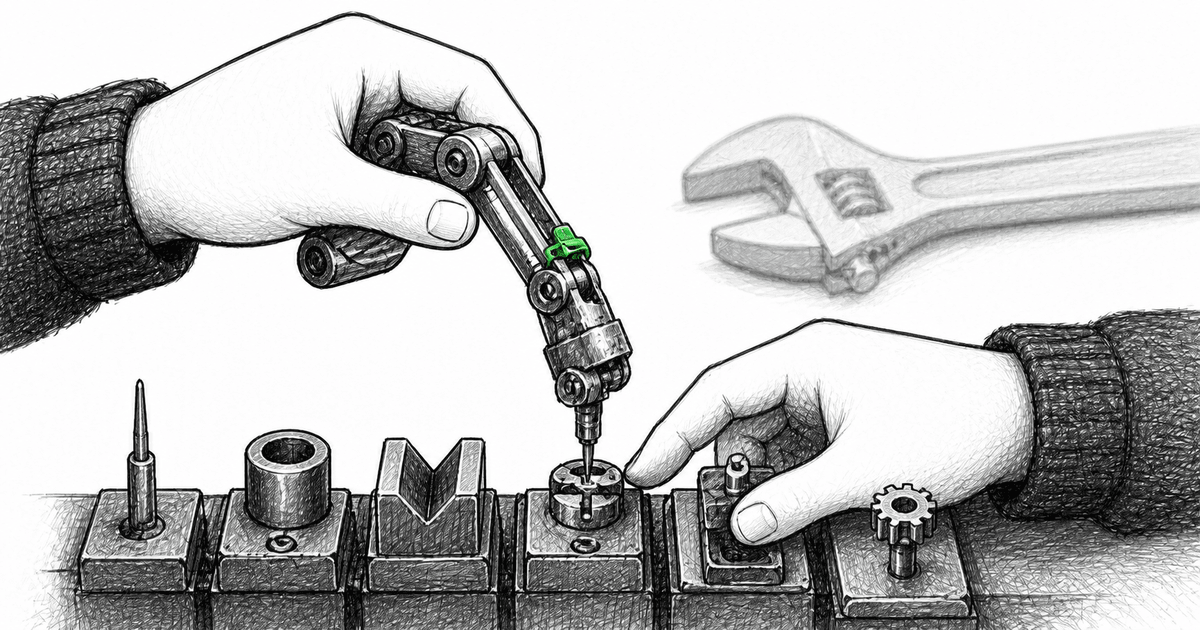
An agent cannot reason about information it cannot reach, and a vague tool description turns a precise capability into a guessing game. Tool design is not plumbing around the model. It is part of how the agent thinks.
 088 min read
When an Agent Should Ask Instead of Acting
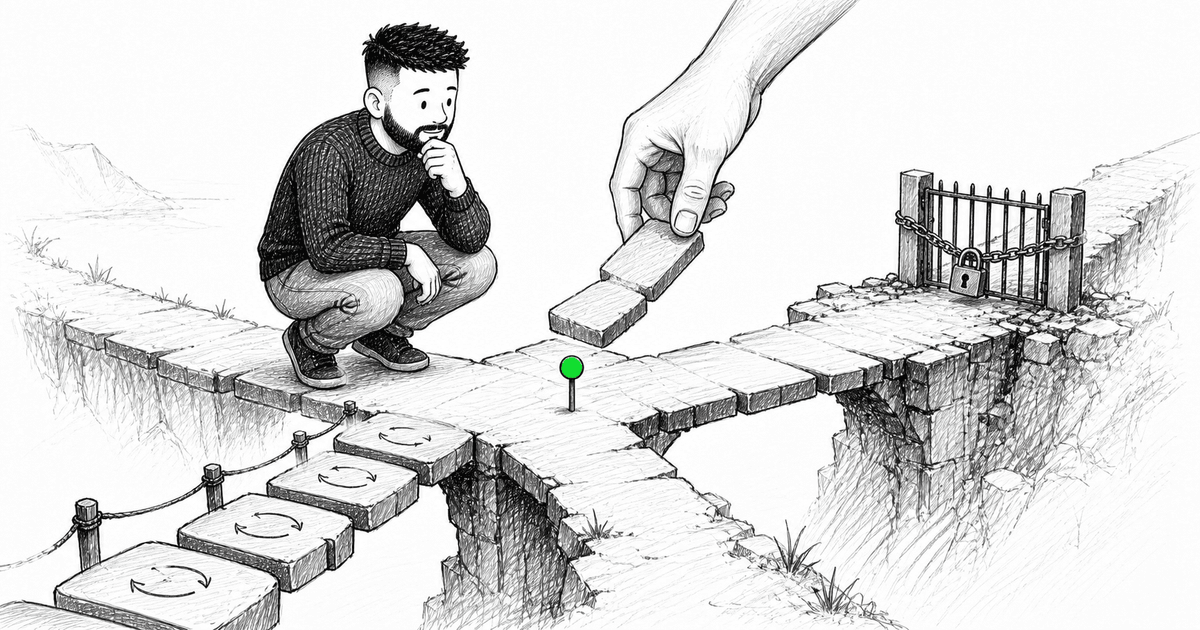
Autonomy is not a single setting to turn up. A useful agent knows which decisions it owns, which ones it can reverse, and which moments need a human before the next step.
 099 min read
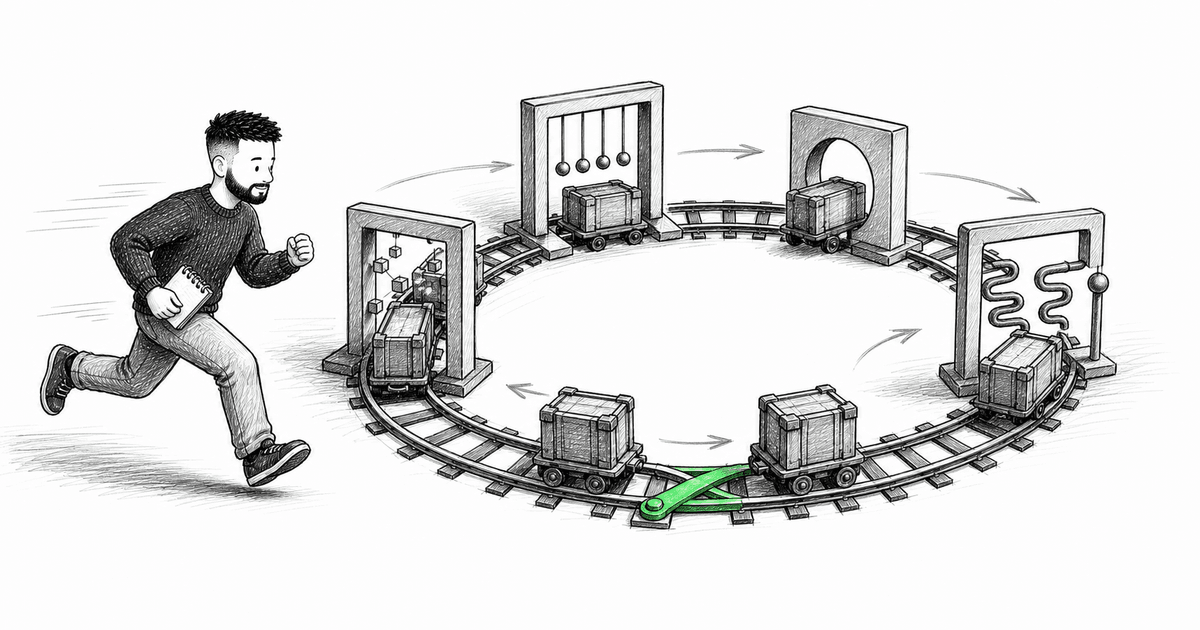
Memory Is Not a Bigger Context Window
A long transcript can remember everything and still help with almost nothing. Durable agent memory is the small set of current facts, decisions, and lessons that makes the next run start from a better baseline.
 1010 min read
Evaluation Is the Missing Loop in Agent Workflows
An agent that feels better after a prompt change may still be getting worse. Without a small set of realistic tasks, explicit expectations, and recorded failures, agent improvement is just a sequence of impressions.
Upkeep
1 articleThe part nobody schedules: keeping an agent's own rules honest as the project moves on.
Engineering the Workflow
5 articlesHow context, evidence and control survive ordinary engineering work.
 129 min read
The Work Around the Agent Is Engineering Work
My use of coding agents gradually became work on the environment around them: current context, tool access, focused checks, review and recovery. The useful distinction is not how much an agent can do, but what makes its result defensible.
 137 min read
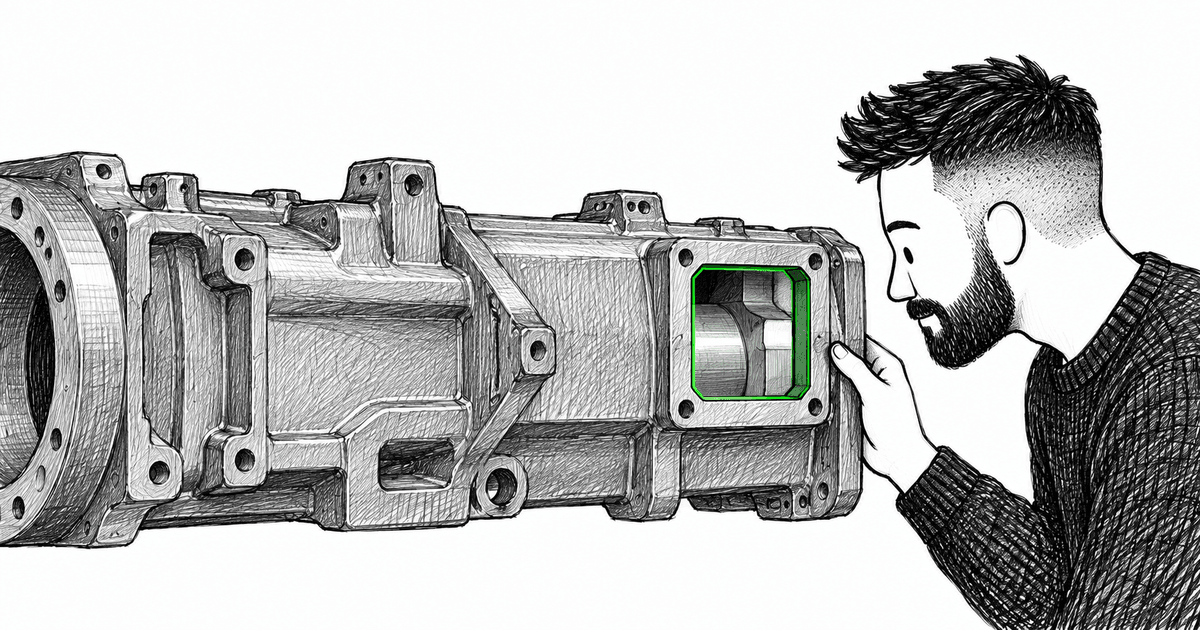
Green Checks Only Cover What You Checked
A local build can accept a dependency change while a related service rejects its contract. The useful work is establishing the scope and freshness of the evidence, including when the original proposal should be closed rather than completed.
 147 min read
The Command Succeeded. The Scope Changed.
Hooks and generators can transform a small, reviewed change into a different committed artifact. Agent workflows need to inspect the output of automation, distinguish unrelated drift, and stop when the final scope no longer matches the task.
 157 min read
A Review Belongs to a Commit
Review automation has to track more than whether it has seen a PR. Findings, CI evidence, duplicate suppression and guarded actions need a revision and a lifecycle, while final approval remains an accountable human decision.
 167 min read
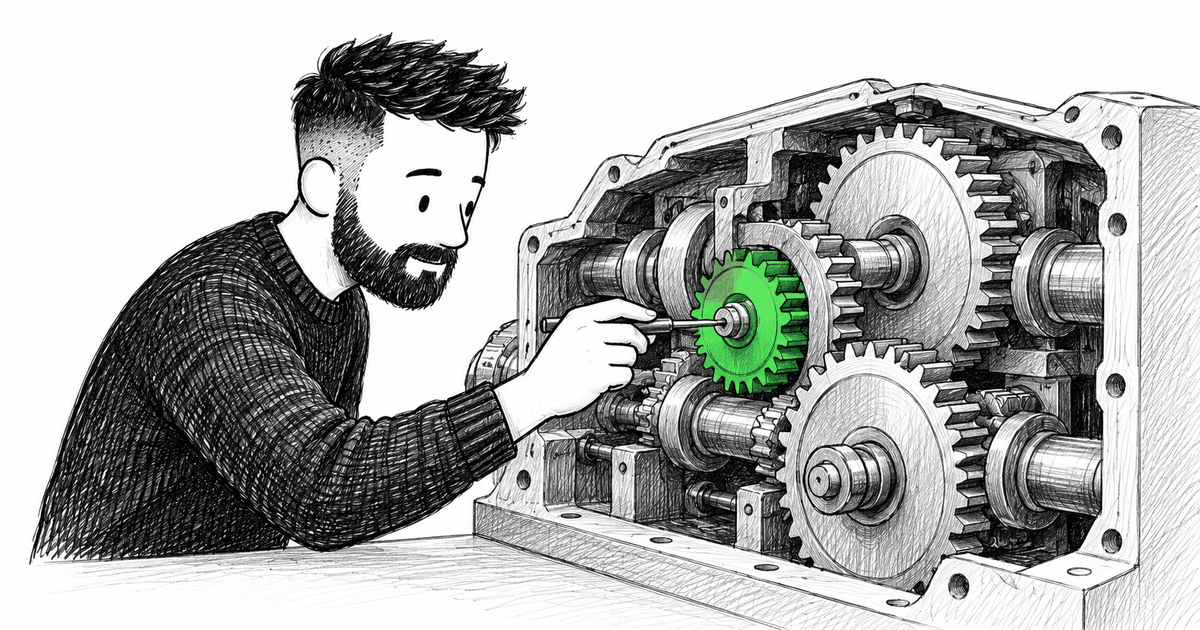
What a Skill Changed, and What It Didn't
A successful task can depend on a skill, existing instructions, tool access, tests, or a person correcting the assumption. Evaluating agent workflows means keeping those contributions apart instead of turning one good result into a productivity claim.